
Internal Auditing – How Often ?

Any organisation/business is required to conduct internal audits to maintain its ISO9001 standard. The audit involves testing out company processes and procedures to determine the standard at which they operate when compared to how they should work. Audits are designed to help employees but the mere mention of the word can see your staff sent into a panic, scrambling around to make everything look perfect. However, communicating yourself well to your staff on the benefit of the audits, and letting them know that this is not a finger pointing exercise, can serve well to make these audits more positive.

Internal audits should be viewed in a positive light, a chance to take a step back and have your process reviewed by a fresh set of objective eyes. They are an ideal way to prepare for external assessment too. In some ways internal assessments can be more thorough as processes are examined more closely, more frequently and in greater detail than external auditors.

ISO 9001 does not specify how often internal audits should be conducted. Instead, the requirements are that organisations audit based on how important a process is, the risks involved and whether there is an existing record of previous concerns. Consideration should also be given to quality objectives as these can dictate audit frequency. At the least, internal audits should be carried out annually. There are two ways around this – auditors may decide to review processes in one go, or they may portion off aspects and have a plan which details the schedule over a number of months. Complex processes may require more frequent assessment and this should be built into an internal audit plan.

The audit plan removes the need for panic and helps eliminate an atmosphere of mistrust. It lets everyone know what will be happening and when, as well as allowing process owners time to complete any improvements that may be taking place. Although the audit plan is made general knowledge, the detail relating to timings should be confirmed with respective process owners as soon as is possible.

The internal audit should not be seen as second string to an external audit and for that reason it needs to be as thorough as possible. Appointed auditors may benefit from some training and development to support them in getting the best out of the process. Auditors should apply a variety of methods to test the process including talking to employees, reviewing data and relevant documentation as well as and perhaps most importantly observing the process in practice. Part of being thorough is keeping accurate documentation that is a true reflection of the findings, for both management and future audits.

The aim of the audit should not be to purely report non-conformance, but auditors should also use the opportunity to highlight areas of a process which may benefit from change. Therefore as important as the audit is the follow up. Follow ups are critical to ensuring that the audit cycle is closed off, and they are also a great motivating factor for further improvements.

source: http://synergosconsultancy.co.uk

Global management standards

The ISO 9001 family – Global management standards (International Organization for Standardization).

 This video from the International Organization for Standardization, explores the worldwide impact on business of the ISO 9000 family of international management standards.

https://www.youtube.com/watch?v=oq1Zi_V4KyE

TRAINING PLAN AND TRAINING REALIZATION – TRAINING NEED ANALYSIS,

choose-personIntroduction

The Quality management principles underlying the ISO 9000 family of standards (of which the ISO 10000 series form a part) emphasize the importance of human resource management and the need for appropriate training. They recognize that customers are likely to both respect and value an organization’s commitment to its human resources and its ability to demonstrate the strategy used to improve the competence of its personnel.

Personnel at all levels should be trained to meet the organization’s commitment to supply products of a required quality in a rapidly changing market place where customer requirements and expectations are increasing continuously.

This International Standard provides guidelines to assist organizations and their personnel when addressing issues related to training. It may be applied whenever guidance is required to interpret references to “education“ and “training“ within the ISO 9000 family of quality assurance and quality management standards. Any references to “training“ in this document includes all types of education and training.

An organization’s objectives for continual improvement, including the performance of its personnel, might be affected by a number of internal and external factors including changes in markets, technology, innovation, and the requirements of customers and other stakeholders. Such changes may require an organization to analyse its competence-related needs. Figure 1 illustrates how training could be selected as an effective means of addressing these needs.

Training Need Analysis, Training Plan and Training Realization

Training can be described as “the acquisition of skills, concepts or attitudes that result in improved performance within the job environment”.

Training is process to provide and develop knowledge, skills and behaviours to meet requirements” (ISO 10015 Clause 3.2)

Training analysis looks at each aspect of an operational domain so that the initial skills, concepts and attitudes of the human elements of a system can be effectively identified and appropriate training can be specified.

Training analysis as a process often covers:

  • Training Analysis is most often used as part of the system development process. Due to the close tie between the design of the system and the training required, in most cases it runs alongside the development to capture the training requirements

Training Analysis (sometimes called Training Needs Analysis (TNA)) is the process of identifying the a gap in employee training and related training needs.

Training Needs Analysis (TNA) is defined as the “Identification of training requirements and the most cost effective means of meeting those requirements”.

A TNA should always be performed where a major new development in policy, equipment acquisition or procedures is deemed to have potential impact upon the current training regime.

What is ISO 10015?

The ISO 10015 Quality Standard for Training is a sector specific quality assurance system. It focuses on training processes at the workplace.

ISO 10015 complements ISO 9001 Standard and further elaborates on the clause 6.2.2 — “Awareness, Competence and Training” and gives clear guidance for its implementation.

The role of this ISO 10015 International Standard is

  • to provide guidance that can help an organization to identify and analyse training needs,
  • design and plan the training,
  • provide for the training,
  • evaluate training outcomes,
  • and monitor and improve the training process

in order to achieve its objectives.

It emphasizes the contribution of training to continual improvement and is intended to help organizations make thier training a more effective and efficient investment.

Scope of ISO 10015

This standard cover the development, implementation, maintenance, and improvement of strategies and systems for training that affect the quality of the products supplied by an organization.

This International Standard applies to all types of organizations.

It is not intended for use in contracts, regualtions, or for certification.

It does not add to, change, or otherwise modify requirements for the ISO 9000 series.

This International Standard is not intended to be used by training providers delivering services to other organizations.

Training providers may use this International Standard when addresing the training needs of their own personnel.

Source: www.ngusuyasa.wordpress.com

Principles of Total Quality Management,

TOTAL QUALITY MANAGEMENT (TQM)
tqm

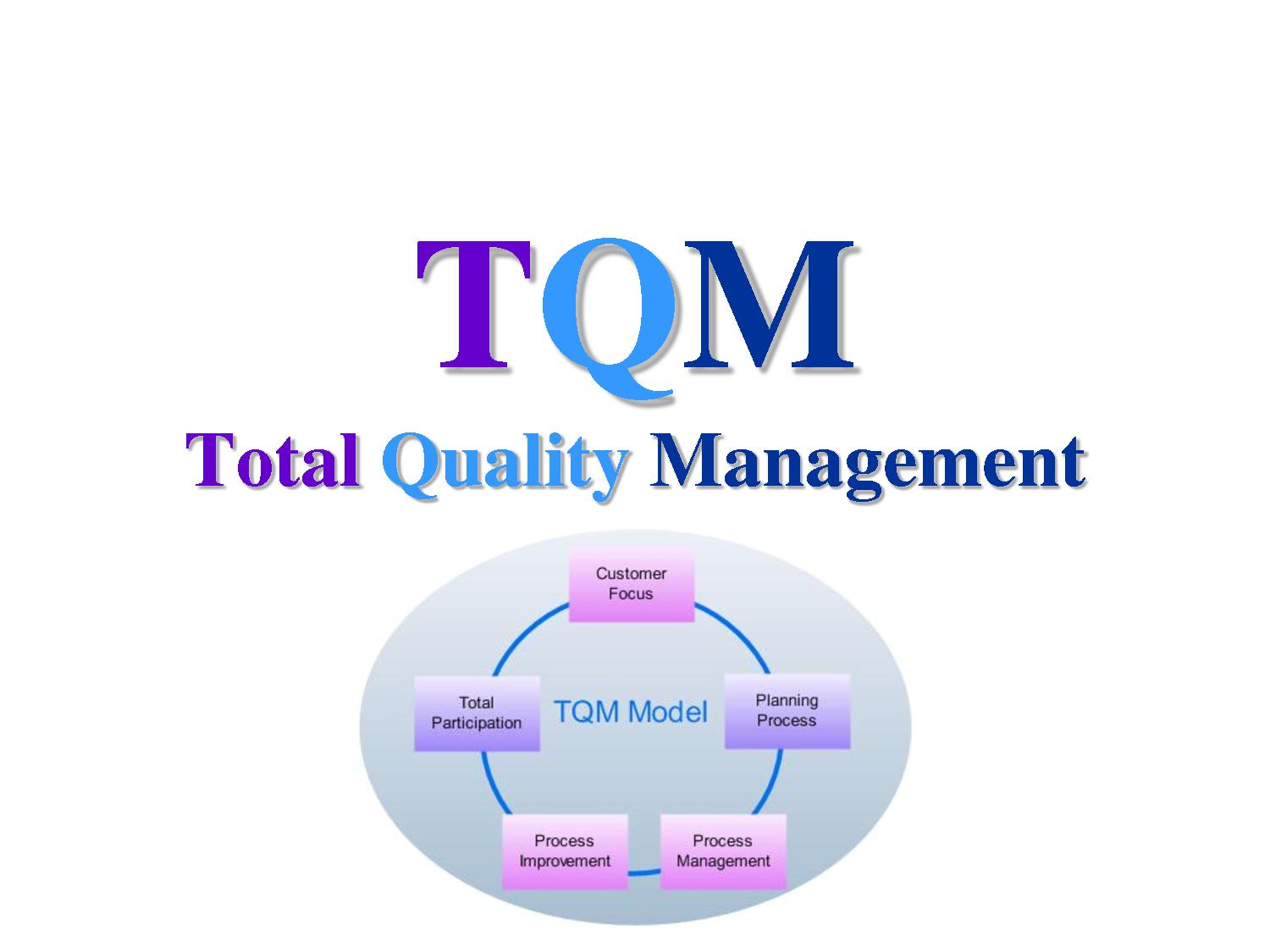
TQM can be defined as the management of initiatives and procedures that are aimed at achieving the delivery of quality products and services.

A number of key principles can be identified in defining TQM, including:

Executive Management – Top management should act as the main driver for TQM and create an environment that ensures its success.

Training – Employees should receive regular training on the methods and concepts of quality.

Customer Focus – Improvements in quality should improve customer satisfaction.

Decision Making – Quality decisions should be made based on measurements.

Methodology and Tools – Use of appropriate methodology and tools ensures that non-conformances are identified, measured and responded to consistently.

Continuous Improvement – Companies should continuously work towards improving manufacturing and quality procedures.

Company Culture – The culture of the company should aim at developing employees ability to work together to improve quality.

Employee Involvement – Employees should be encouraged to be pro-active in identifying and addressing quality related problems.

Main Steps to Improve Manufacturing Quality

There is no better cost to eliminate than the cost of poor quality.

stairs

Good managers seek to contain costs in the manufacturing environment. There is no better cost to eliminate than the cost of poor quality. Scrap material and lost labor hours add no value to the operation.

In order to best eliminate these wastes, a strategic approach to quality improvement is essential. By following these five steps, quality can be improved in a meaningful, sustainable way.

Use a team mindset

Quality won’t be sustainably improved by individuals. To really make lasting and meaningful change in manufacturing processes, it will take a team-based approach. By involving multiple disciplines in the search for improved quality, a variety of perspectives is obtained. Also of importance is knowledge of process history. Why is the process the way it is today? There must be a reason or cause, and that reason should be considered so as not to repeat a problem of days gone by. By considering history and group perspective, solid improvements can be obtained.

Define quality from the customer perspective

Too often, staff within a manufacturing environment want to make a product “better” but don’t really know what better means. With additional cost, we almost always can make a product better. But is additional cost desirable by the customer even if it means better product life? Someone in the organization should serve as the customer advocate. Typically this voice can come from the sales or marketing departments. Use the customers’ perspective to define what the best-in-class product would be and meet those requirements while minimizing cost.

Develop understanding of the Cost of Quality

The cost to fix a defect in the field once it reaches a customer is dramatically higher than the cost to fix the source of the problem before it is created. It is essential that the manufacturing staff be trained to understand the cost multipliers involved with warranty repair or replacement and cost of damaged reputation. Once the staff take this perspective, a desire to find root cause for problem solving is inherently developed.

Solve problems completely

All too often, manufacturing quality improvements fix the symptoms of failure rather than the root cause. This can be done by adding quality inspection steps or rework stations that make it more efficient to fix defects. Instead, a true understanding of root cause should be developed within the teams. When teams develop the ability (through Ishikawa, fault tree, or five-why analysis) to ascertain root cause of defects in the manufacturing process along with a “killer test” that verifies the ability to turn-on and turn-off the problem in the manufacturing process, true solutions to problems will be created that will not allow the return of the issue.

Employ strong process discipline

Throughout the quality improvement process, it is essential that strong process discipline is employed. Depending on the product that is being manufactured, deviation without proper team cooperation and anticipation of the change could have dire quality repercussions. While the organization should avoid cumbersome bureaucracy that inhibits innovation, it is essential that some structure be employed to maintain consistency and an understanding of the way the product is produced during that time period so that root cause can also be identified later if new problems arise as a consequence of the change.

By following these above steps, good management teams can develop great quality programs within their organizations.

source: http://www.industryweek.com

Body Language

Student-Body-Language-Poster2
Since man is communicating in many different ways, even small movements of the hands, arms or wiggle facial muscle contractions are perceived by the recipient, who does not respond.
In interpersonal relations very often need a personal conversation in private. Then the observation of facial expressions partner and his body control is very useful. Even if the recipient is not aware of any rules governing the body language, unconsciously sends and receives signals affirmative or negative words.

The simplest movements of the facial muscles express their feelings clear and simple – to raise eyebrows is a surprise, think wrinkle forehead or expresses disagreement on the solution, flat and wide smile, showing his teeth at the same time can be a symbol of mockery, and squinting eyes behind suspicious.

Autor: Source Management Systems Consulting

Involvement of People

People at all levels are the essence of an organization and their full involvement enables their abilities to be used for the organization’s benefit.

Key Benefits :

Applying the principle of involvement of people typically leads to :

• Motivated, committed and involved people within the organization
• Innovation and creativity in furthering the organization’s objectives
• People being accountable for their own performance

• People eager to participate in and contribute to continual improvement.
• People understanding the importance of their contribution and role in    the organization
• People identifying constraints to their performance
• People accepting ownership of problems and their responsibility for solving them
• People evaluating their performance against their personal goals and objectives
• People actively seeking opportunities to enhance their competence, knowledge and experience
• People freely sharing knowledge and experience
• People openly discussing problems and issues.

Plan-Do-Check-Act Cycle

PDCA Cycle:  Plan-Do-Check-Act,

PDCA-CyclePDCA is an  four-step management method used in business for the control and continuous improvement of processes and products. ISO 9001:2008 International Standard promotes the adoption of a process approach and PDCA cycle when developing, implementing and improving the effectiveness of a quality management system, to enhance customer satisfaction by meeting customer requirements.

PDCA can be briefly described as follows.

  • Plan: establish the objectives and processes necessary to deliver results in accordance with customer requirements and the organization’s policies.
  • Do: implement the processes.
  • Check: monitor and measure processes and product against policies, objectives and requirements for the product and report the results.
  • Act: take actions to continually improve process performance.

QMS systems1


P is for Plan

In any project, you will first need a detailed plan. Make sure to identify your goals, delegate work properly and set a clear action plan with key milestones.

Don’t forget to document your plans in order to help you analyze its effectiveness later.

D is for Do

Once you have your plan, do it! As no plan is ever completely perfect, make sure you make a list of problems as you encounter them, and how you responded to them.

C is for Check

Once you’ve finished the project, immediately call the team to compile the list of problems and solutions they’ve encountered. Share the information with the team so that everyone knows and understands how to avoid these problems, or to fix them if they happen to reappear again later.

A is for Act

You now know the root causes of the problems, now fix them. Your job here is to ensure these problems don’t rear their ugly heads again the next time you carry out this project. Solving an issue by fixing the root cause is like uprooting weeds, as they won’t grow back again. If you solve a problem as they come along, then all you’re doing is cutting weeds. With a bit of time, they’ll just grow back and come back to haunt you.

Once the root causes are eliminated, it is important to standardize these techniques in order to ensure that everyone knows about it, and that they don’t happen again. That can be achieved through documentation and sharing this knowledge through PDCA meetings with your team.

source: 

http://ngsuyasa.wordpress.com

http://www.bulsuk.com


Autor: Source Management Systems Consulting

Why register your company to ISO 9001 .

Benefits of ISO 9001ISO 9001

ISO 9001:2008 aims to provide a practical and workable Quality Management System for improving and monitoring all areas of your business.

Achieving the standard is not about establishing a set of procedures that are complicated and difficult to manage. With the right support and the knowledge of your employees, you will end up with a system that will improve all areas of your organisation.

Implementing an effective and robust Quality Management System (QMS) will help you to focus on the important areas of your business and improve efficiency. The management processes that are established throughout your business will provide a sound foundation, leading to increased productivity and profit. This in turn will improve your customer acquisition and retention.

Some of the main benefits include:

  • Suitable for both small and large organizations
  • Better internal management
  • Less wastage
  • Increase in efficiency, productivity and profit
  • Improved customer retention and acquisition
  • Consistent outcomes, measured and monitored
  • Globally recognised standard
  • Compatible with other ISO standards

A valid ISO 9001:2008 certificate will be a prerequisite for some of your customers and a “nice to have” for others, when they are considering suppliers.

It gives your customers confidence that you are working to standards and procedures that will provide them with a high standard of customer service.

Benefits to your customers:
The ISO 9001:2008 standard is recognised worldwide and your customers will understand the benefits of working with companies that are ISO 9001:2008 certified. In fact, some of your customers will only do business with certified companies because it gives them assurance that you management systems are constantly assessed and approved.

They will know from experience that working with ISO 9001:2008 certified companies provides many advantages:

Minimizes mistakes:
Improves reporting and communications
Better quality products and service
More reliable production scheduling and delivery
Standards maintained by annual assessments