Principles of Total Quality Management,

TOTAL QUALITY MANAGEMENT (TQM)
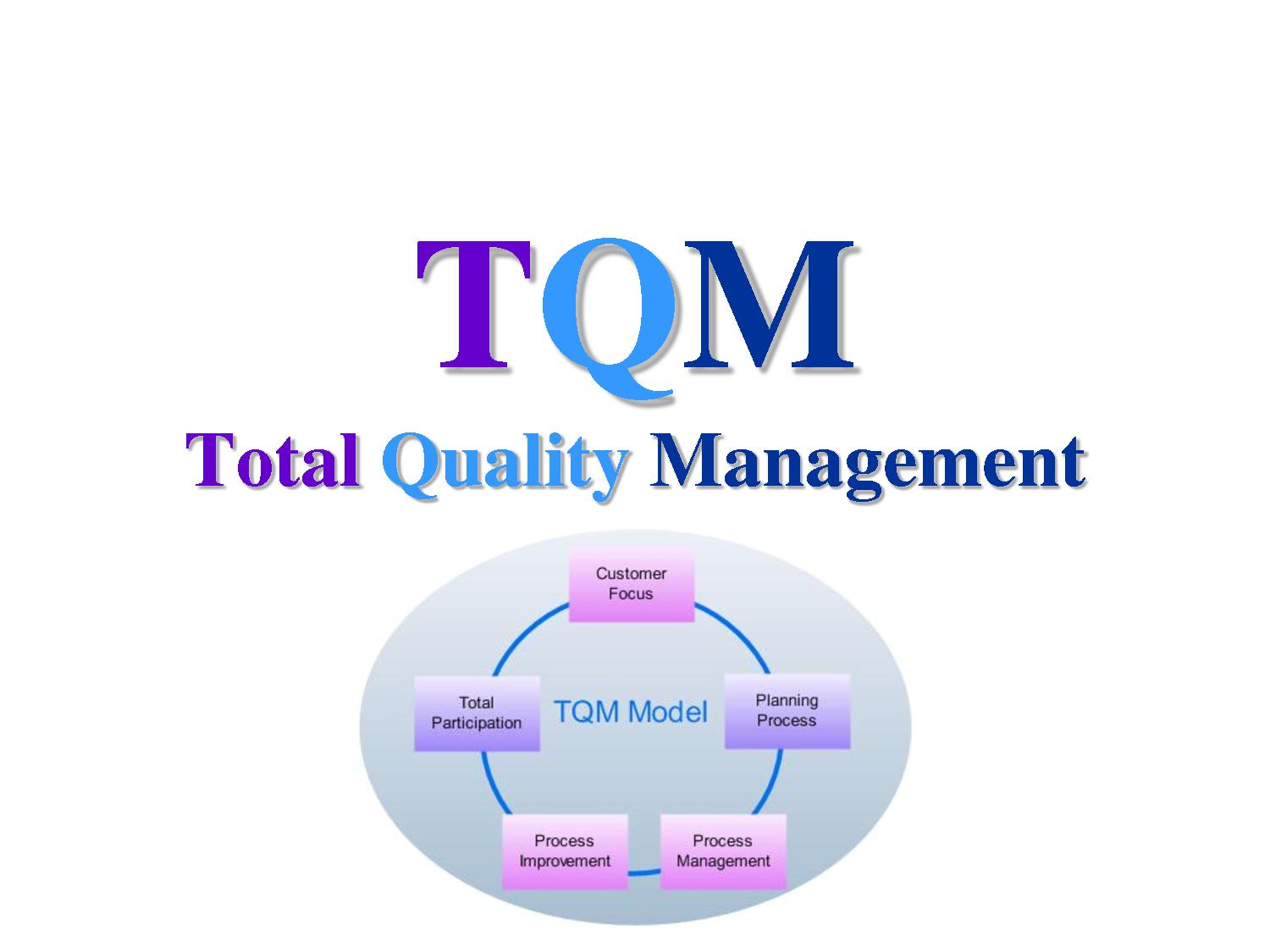
tqm

TQM can be defined as the management of initiatives and procedures that are aimed at achieving the delivery of quality products and services.

A number of key principles can be identified in defining TQM, including:

Executive Management – Top management should act as the main driver for TQM and create an environment that ensures its success.

Training – Employees should receive regular training on the methods and concepts of quality.

Customer Focus – Improvements in quality should improve customer satisfaction.

Decision Making – Quality decisions should be made based on measurements.

Methodology and Tools – Use of appropriate methodology and tools ensures that non-conformances are identified, measured and responded to consistently.

Continuous Improvement – Companies should continuously work towards improving manufacturing and quality procedures.

Company Culture – The culture of the company should aim at developing employees ability to work together to improve quality.

Employee Involvement – Employees should be encouraged to be pro-active in identifying and addressing quality related problems.

Why register your company to ISO 9001 .

Benefits of ISO 9001ISO 9001

ISO 9001:2008 aims to provide a practical and workable Quality Management System for improving and monitoring all areas of your business.

Achieving the standard is not about establishing a set of procedures that are complicated and difficult to manage. With the right support and the knowledge of your employees, you will end up with a system that will improve all areas of your organisation.

Implementing an effective and robust Quality Management System (QMS) will help you to focus on the important areas of your business and improve efficiency. The management processes that are established throughout your business will provide a sound foundation, leading to increased productivity and profit. This in turn will improve your customer acquisition and retention.

Some of the main benefits include:

  • Suitable for both small and large organizations
  • Better internal management
  • Less wastage
  • Increase in efficiency, productivity and profit
  • Improved customer retention and acquisition
  • Consistent outcomes, measured and monitored
  • Globally recognised standard
  • Compatible with other ISO standards

A valid ISO 9001:2008 certificate will be a prerequisite for some of your customers and a “nice to have” for others, when they are considering suppliers.

It gives your customers confidence that you are working to standards and procedures that will provide them with a high standard of customer service.

Benefits to your customers:
The ISO 9001:2008 standard is recognised worldwide and your customers will understand the benefits of working with companies that are ISO 9001:2008 certified. In fact, some of your customers will only do business with certified companies because it gives them assurance that you management systems are constantly assessed and approved.

They will know from experience that working with ISO 9001:2008 certified companies provides many advantages:

Minimizes mistakes:
Improves reporting and communications
Better quality products and service
More reliable production scheduling and delivery
Standards maintained by annual assessments